
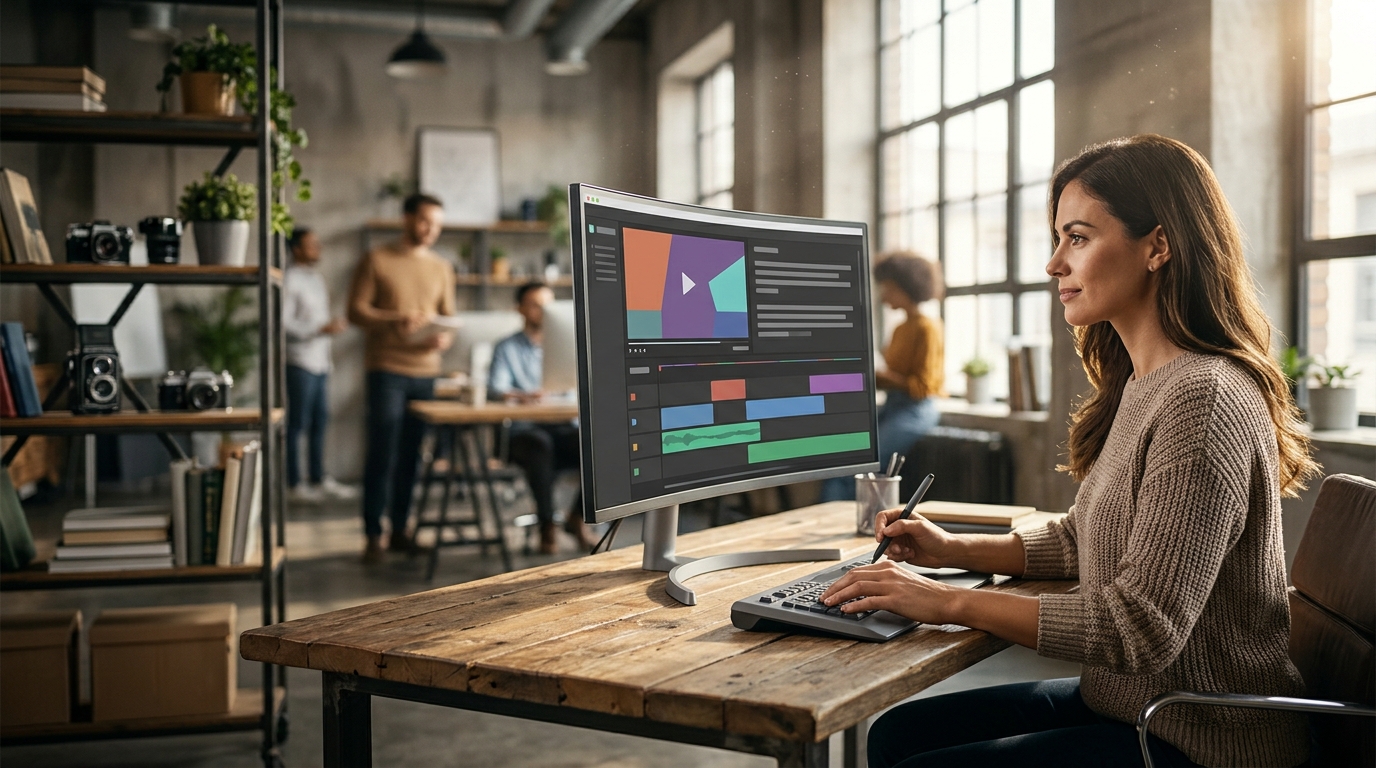
Transcript-based editing is a workflow where you cut video by editing the text transcript rather than dragging clips on a timeline. This method allows marketers to refine messaging, remove filler words, and restructure narratives with the speed of a word processor. For teams using platforms like Promo.com, this approach bridges the gap between raw footage and polished, brand-ready marketing assets. As noted by the Kennesaw State Writing Center, editing is the stage where clarity, style, and sentence structure are refined to elevate the final product. For more information about our platform, you can visit our About Us page.
The Mechanics of Text-Centric Editing
Traditional video editing requires precise frame-by-frame adjustments, a process that is often slow and technically demanding. Transcript-based editing changes this dynamic by treating the video as a document. When you delete a sentence in the text, the corresponding video segment is removed automatically. This synchronization ensures that the visual and audio elements remain aligned without manual scrubbing.
This method is particularly effective for talking-head videos, interviews, and explainer content. It reduces the cognitive load on editors, allowing them to focus on the story rather than the technical mechanics of the timeline. By prioritizing the script, you ensure that the final video delivers a clear and coherent message to your audience.
Improving Narrative Flow and Clarity
One of the primary benefits of editing from a script is the ability to restructure content easily. You can move paragraphs around to improve the logical flow of your argument or highlight key points. This flexibility is crucial for marketing videos, where the first few seconds determine viewer retention. A well-structured script leads to a video that engages viewers from start to finish, a principle supported by the Kennesaw State Writing Center which emphasizes the importance of clarity and organization in editing.
Consider a scenario where a speaker rambles during a product demonstration. In a traditional timeline, you might spend minutes finding the exact cut points. With transcript editing, you simply highlight the rambling text and delete it. The result is a tighter, more professional video that respects the viewer's time. This level of precision is essential for maintaining brand authority and credibility.
Enhancing Accessibility and SEO
Transcript-based workflows naturally produce accurate text files, which can be repurposed for subtitles and closed captions. Subtitles are not just an accessibility feature; they are a critical component of modern video marketing. Many users watch videos on mute, especially on social media platforms. By ensuring your video has accurate captions, you significantly increase its reach and engagement.
Furthermore, the text transcript can be used to optimize your video for search engines. Including relevant keywords in your captions and descriptions helps platforms like YouTube and Facebook understand the content of your video. This SEO benefit can drive organic traffic to your marketing campaigns, a strategy well-suited for business video marketing. Promo.com supports this workflow by providing tools that integrate text and video, making it easier to create accessible and searchable content.
Streamlining the Production Workflow
Time is a valuable resource in marketing. Transcript-based editing can significantly reduce post-production time compared to traditional methods. This efficiency allows teams to produce more content with the same resources. For small businesses and startups, this speed is a competitive advantage. You can test different messages and formats quickly, iterating based on performance data.
When using an AI-powered platform, this workflow becomes even more powerful. AI can transcribe your footage automatically, providing a starting point for your edits. You can then refine the text, add branding elements, and publish the video. This end-to-end process simplifies the creation of professional marketing videos, even for teams without dedicated video editors.

Integrating Branding and Visuals
While the text drives the narrative, the visuals must support the message. Transcript-based editing allows you to align visual assets with specific parts of the script. For example, you can add a product image when the speaker mentions a feature or a logo when the brand is introduced. This synchronization ensures that the video feels cohesive and professional.
Platforms like Promo.com offer libraries of stock footage, music, and templates that can be easily integrated into your transcript-based workflow. You can customize these elements to match your brand identity, ensuring consistency across all your marketing materials. This level of control is essential for building a strong brand presence in a crowded digital landscape.
Key Takeaways
- Transcript-based editing allows you to cut video by editing text, significantly speeding up the post-production process.
- Editing from a script improves narrative flow, allowing you to restructure content easily and remove filler words.
- This workflow reduces post-production time, allowing marketing teams to produce more content with fewer resources.
- AI-powered platforms can automate transcription, providing a seamless starting point for transcript-based editing.
This method is ideal for talking-head videos, interviews, and explainer content where narrative clarity is paramount.
Accurate transcripts enable the creation of subtitles and captions, enhancing accessibility and SEO performance.
Integrating visual assets with specific script segments ensures a cohesive and professional final product.
Frequently Asked Questions
What is transcript-based video editing?
Transcript-based video editing is a method where you edit the text transcript of a video to make changes to the video itself. Deleting or moving text automatically adjusts the corresponding video and audio segments.
Does transcript editing work for all types of videos?
It works best for videos with clear speech, such as interviews, tutorials, and talking-head content. It is less effective for highly visual content with minimal dialogue, such as music videos or action sequences.
How does transcript editing improve video SEO?
Transcripts provide accurate text that can be used for subtitles and metadata. This helps search engines understand the content of your video, improving its visibility in search results and platform recommendations.
Can I use transcript editing with AI video tools?
How much time does transcript editing save?
Transcript editing can significantly reduce post-production time compared to traditional timeline editing. This efficiency allows teams to produce more content faster.
What are the limitations of transcript-based editing?
The main limitation is that it requires clear audio for accurate transcription. If the audio is poor quality, the transcript may contain errors that need manual correction. Additionally, it is less suitable for complex visual editing that requires frame-by-frame precision.
Start Editing Smarter with Promo.com
Transcript-based editing is a powerful tool for modern marketing teams. By focusing on the script, you can create clearer, more engaging, and more accessible videos. Promo.com provides the tools and templates you need to streamline this workflow and produce professional marketing content. Explore the platform to see how you can integrate transcript editing into your video production process.