%22%20stroke-width%3D%222%22%3E%3Ccircle%20stroke-opacity%3D%22.5%22%20cx%3D%2218%22%20cy%3D%2218%22%20r%3D%2218%22%2F%3E%3Cpath%20d%3D%22M36%2018c0-9.94-8.06-18-18-18%22%3E%3CanimateTransform%20attributeName%3D%22transform%22%20type%3D%22rotate%22%20from%3D%220%2018%2018%22%20to%3D%22360%2018%2018%22%20dur%3D%221s%22%20repeatCount%3D%22indefinite%22%2F%3E%3C%2Fpath%3E%3C%2Fg%3E%3C%2Fg%3E%3C%2Fsvg%3E)

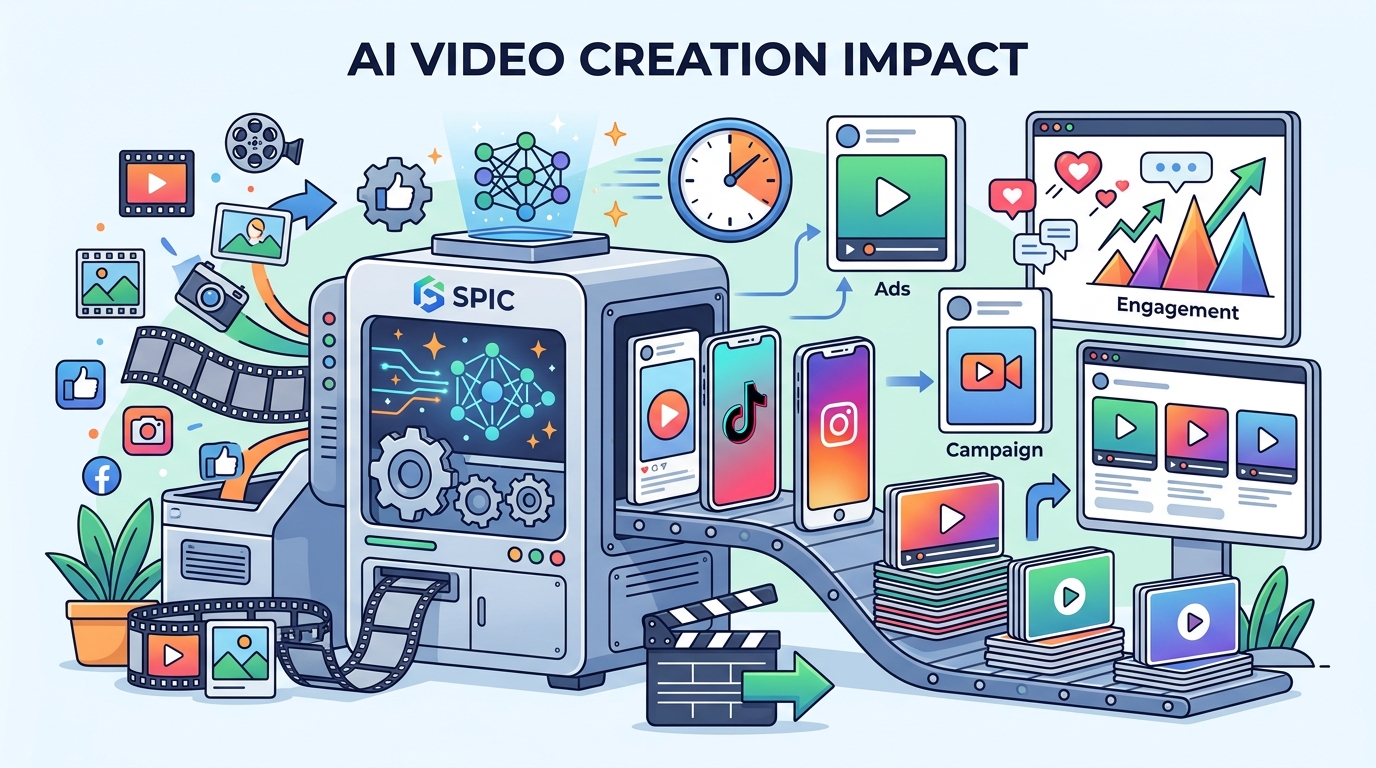
AI video creation transforms video marketing by automating production, reducing costs, and enabling personalized content at scale. This guide explores how AI tools like PromoAI help businesses generate high-quality videos faster, improve engagement, and optimize campaigns across social media and advertising channels.
Scaling Content Volume
Traditional video production is time-intensive, requiring scripting, filming, editing, and post-production. AI video creation eliminates these bottlenecks by generating multiple video variations from a single input. Businesses can now produce dozens of unique videos in minutes rather than weeks. This capability is critical for maintaining a consistent posting schedule across multiple platforms.
Automated Content Generation
AI tools analyze brand assets, including logos, colors, and fonts, to create on-brand content automatically. PromoAI, for example, generates 30 unique videos tailored to a business in one click. This automation allows marketing teams to focus on strategy rather than manual editing. The result is a steady stream of fresh content that keeps audiences engaged.
Multi-Platform Distribution
Each platform requires different aspect ratios and formats. AI video makers can automatically resize and adapt content for Facebook, Instagram, YouTube, and TikTok. This ensures that a single campaign can be distributed across all channels without manual reformatting. Consistent presence across platforms increases brand visibility and reach.
Personalization and Targeting
AI enables hyper-personalized video content that resonates with specific audience segments. By analyzing user data and behavior, AI tools can create videos that speak directly to individual preferences. This level of personalization was previously impossible at scale due to the high cost of custom video production.
Dynamic Creative Optimization
Dynamic creative optimization (DCO) uses AI to test different video elements, such as headlines, visuals, and calls to action. The system identifies which combinations perform best for each audience segment. This continuous optimization improves conversion rates and reduces wasted ad spend. Marketers can now deliver the right message to the right person at the right time.
Segment-Specific Messaging
AI can generate different versions of a video for different customer segments. For example, a fitness brand might create one video for beginners and another for advanced athletes. Each version uses the same core message but adjusts the tone, visuals, and call to action. This approach increases relevance and drives higher engagement from each segment.
Cost Efficiency and Resource Allocation
Professional video production is expensive, often costing thousands of dollars per video. AI video creation reduces these costs significantly, making high-quality video accessible to businesses of all sizes. This cost efficiency allows companies to allocate resources to other marketing initiatives, such as paid advertising and customer acquisition.
Reduced Production Costs
AI tools eliminate the need for large production teams, expensive equipment, and lengthy editing processes. Businesses can create professional-looking videos using templates and AI-generated content. This reduction in overhead enables small and medium-sized businesses to compete with larger companies in the video marketing space.
Resource Reallocation
By automating video production, marketing teams can focus on high-value tasks, such as strategy development and audience research. This shift in resource allocation improves overall marketing effectiveness. Teams can spend more time analyzing performance data and refining campaigns rather than manually editing videos.
Performance Optimization and A/B Testing
AI accelerates the A/B testing process by generating multiple video variations quickly. Marketers can test different elements, such as length, music, and visuals, to identify the most effective combinations. This data-driven approach improves campaign performance and maximizes return on investment.
Rapid Iteration
Traditional A/B testing is slow due to the time required to produce new video variations. AI tools enable rapid iteration by generating new versions in minutes. This speed allows marketers to test more hypotheses and find winning combinations faster. Continuous testing leads to ongoing improvements in video performance.
Data-Driven Decisions
AI analyzes performance data to identify patterns and predict outcomes. This insight helps marketers make informed decisions about future video content. By leveraging data, businesses can reduce guesswork and improve the effectiveness of their video marketing efforts.
Maintaining Brand Consistency
AI video tools ensure brand consistency by applying brand guidelines automatically. These guidelines include colors, fonts, logos, and tone of voice. This automation prevents off-brand content from being published, which can damage brand perception. Consistent branding builds trust and recognition among audiences.
Brand Asset Management
AI tools store and manage brand assets, ensuring that the latest versions are used in all videos. This centralization reduces the risk of using outdated or incorrect assets. It also simplifies the process for multiple team members working on video content.
Tone and Style Alignment
AI can analyze existing brand content to understand the preferred tone and style. It then applies this understanding to new videos, ensuring that the message aligns with the brand's voice. This consistency helps build a strong brand identity across all video content.
Platform-Specific Adaptation
Each social media platform has unique requirements for video content. AI video makers can automatically adapt videos to meet these requirements, ensuring optimal performance on each platform. This adaptation includes adjusting aspect ratios, lengths, and formats.
Aspect Ratio Optimization
Vertical videos perform best on mobile-first platforms like Instagram and TikTok, while horizontal videos are preferred on YouTube and Facebook. AI tools can automatically resize videos to the correct aspect ratio for each platform. This ensures that content displays correctly and looks professional.
Format Compliance
Platforms have specific rules for video ads, including maximum lengths and file sizes. AI tools ensure that videos comply with these rules, preventing rejections or poor performance. This compliance saves time and ensures that ads run smoothly across all channels.
Comparison Table: Traditional vs. AI Video Creation
| Feature | Traditional Video Production | AI Video Creation |
|---|---|---|
| Production Time | Days to Weeks | Minutes |
| Personalization | Limited | High (Dynamic) |
| Scalability | Low | High |
| Brand Consistency | Manual | Automated |
| Platform Adaptation | Manual | Automatic |
Key Takeaways
- AI video creation scales content volume by generating multiple videos in minutes.
- Personalization improves engagement by delivering segment-specific messages.
- Cost efficiency allows businesses of all sizes to produce high-quality videos.
- Rapid A/B testing optimizes performance and maximizes ROI.
- Automated brand management ensures consistency across all content.
- Platform-specific adaptation ensures optimal display on each channel.
- AI tools empower marketing teams to focus on strategy rather than production.
- Continuous data analysis drives ongoing improvements in video marketing.
Frequently Asked Questions
How does AI video creation reduce production time?
AI automates tasks like scripting, editing, and resizing, reducing production time from weeks to minutes.
Can AI videos be personalized for different audiences?
Yes, AI tools can generate segment-specific videos by analyzing user data and preferences.
Is AI video creation cost-effective for small businesses?
Yes, AI tools offer subscription-based pricing that is significantly lower than traditional production costs.
How does AI ensure brand consistency?
AI applies brand guidelines automatically, ensuring that all videos use the correct colors, fonts, and tone.
Can AI videos be adapted for multiple platforms?
Yes, AI tools automatically resize and format videos to meet the requirements of each platform.
What is dynamic creative optimization?
Dynamic creative optimization uses AI to test different video elements and identify the best-performing combinations.
How does AI improve A/B testing?
AI generates multiple video variations quickly, enabling rapid testing and data-driven decisions.
Do AI videos require manual editing?
Minimal manual editing is required, as AI handles most of the production process automatically.
Can AI tools analyze video performance data?
Yes, AI analyzes performance data to identify patterns and predict outcomes, guiding future content creation.
How does AI video creation impact ROI?
By reducing costs and improving performance through optimization, AI video creation increases return on investment.
Conclusion
AI video creation is transforming video marketing by enabling businesses to produce high-quality, personalized content at scale. Tools like PromoAI empower marketers to generate on-brand videos in minutes, optimize performance through data-driven testing, and maintain consistency across platforms. By leveraging AI, businesses can reduce costs, improve engagement, and maximize return on investment. To start creating AI-powered videos for your business, sign up for Promo.com today.